Spain and the Spaniards
Facts
Spain:
Official language: Spanish
Coofficial languages: Galician, Basque, Catalan, Aragonese
Government: Parliamentary Constitutional Monarchy
Capital: Madrid
Head of State: Felipe VI
Head of Government: Mariano Rajoy
Surface: 504.750 km2
Population: 46.439.864 (July 2015 - INE)
Further Data:
Tourism: 65 Million of tourists in the year 2014
Religion: mainly Catholics
National Celebration: the 12th of October - El día de la Hispanidad
There are 17 Autonomous Communities "Comunidades Autónomas":
- Galicia
- Asturias
- Cantabria
- Basque Country
- Navarra
- Aragón
- La Rioja
- Catalonia
- Madrid
- Castile-La Mancha
- Castile and León
- Extremadura
- Andalusia
- Murcia
- Valencia
- Balearic Islands
- Canarian Islands
- And the autonomous towns: Ceuta and Melilla
The Spaniards
Spaniards are commonly known for their strong character and their pride, and I dare to claim that this statement is not for nothing. In general terms speaking, Spanish people love their country, their culture and everything related to their way of living. And they have many reasons to be proud of their country and themselves.
The main focus of the daily life of a Spaniard is the family "LA FAMILIA", which is usually quite big in number. They spend lots of time in the bosom of the related and have strong bounds to each member. Connections and relationships are hereabouts also highly influenced by this criteria.
Generally Spanish people use to function as gregarious animals, and wherever there is one Spaniard you there are several of them! The location doesn't matter. You will always find them in groups of two or more: in the Tapasbar, in the restaurant, on the street or any other public place. People here are very outgoing and even after a long work day, you can see them strolling through the streets, looking for the next bar to socialize. Spaniards have some intrinsic need and desire to share live, crowded open places and bars. There can evidence usually lot of racket, because Spanish people are commmonly noisy and temperamental and they love to feel the atmosphere, el ambiente, of their Tapasbars.
The amazing repertory of swear words, los tacos, which many of them masterly mingle with their daily conversations are employed with an extraordinary skill, stunning naturalness and a particular charm. Foreigners often feel tempted to imitate this, but usually with less accuracy and success. You need to have a good command of the Spanish language to be able to follow colloquial conversations, which are full of sayings, proverbs and many times their way of speaking is very metaphorical. People here are passionate when communicating and they use to speak and gesticulate eagerly, what they call "having character!" It is indeed not always easy to follow their conversations, at least not in the beginning, but this is only a question of time until you get the hang of it.
Spain has its own way of ticking, it is a beautiful country with and with an incredible and particular culture. That's why Spaniards love to say "Spain is different".
Beautiful places of Spain
The North: Galicia, Asturias, Cantabria, The Basque Country
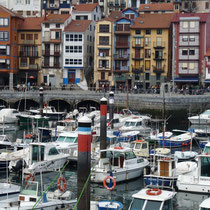


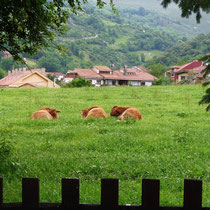


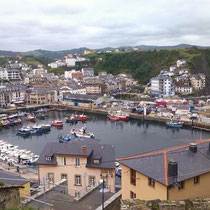
Der North of Spain in notes: Galicia, Asturias, Cantabria, The Basque Country
- Galicia: the provinces are A Coruña, Lugo, Pontevedra, Orense, the capital is Santiago de Compostela
Here stands Chathedral of Santiago de Compostela, being the final destination of the pilgrims of the Way of St James, the roman walls of Lugo, La Muralla de Lugo, the Tower of Herkules in A Coruña and the central place La Plaza de María Pita, etc., furthermore you can see all over the region the beautiful Galician granaries, called orrios gallegos, listen to celtic music (like Irish Folk) and observe the typical glas facades of the housings, the galerias de cristal
- Asturias: the Principality of Asturias being its own province, the capital is Oviedo
Interesting cities are Gijón and Avilés, famous is the roman bridge in Canga de Onis, the lakes of Covadonga, here are idyllic villages of fishermen, the national parque Los Picos de Europa. They have Asturian granaries, called horreos asturianos, Sidra-wine, a white bean stew, the Fabada, edible see-urchin, the herizo del mar, and the famous anchoas of Santoña
- Cantabria: Cantabria is at the same time its own province, the capital is Santander
The prehistorical Altamira-Caves, Las Cuevas de Altamira, declared UNESCO World Heritage due to the cave paintings of the stone-age close to Santillana del Mar, pintoreque villages of fishermen such as Comillas, where you can find the Villa Quijana or El Capricho, a summer house of Antonio Gaudí, der Palast Sobrellano, beautiful coastal villages such as Laredo, San Vicente de la Barquera among others; the heavy dish Cocido Montañes, a stew with chickpeas, Quesada (sweet dessert made of cheese and milk)
- The Basque Country: the provinces are Guipuzcoa, Alava, Vizcaya, the capital is San Sebastian (Donostia)
the famous Guggenheim-Museum in Bilbao, the bay of San Sebastian, La Playa de la Concha, paleolithic cave paintings of Altxerri, Santamamiñe and Ekain, fisherman villages such as Hondarribia and Mundaka, basuqe Pintxos, Stockfish, der bacalao al pilpil, a tuna fish stew, called marmitako
The West of Spain: Extremadura
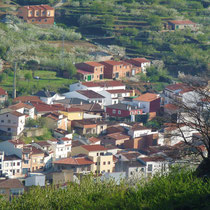

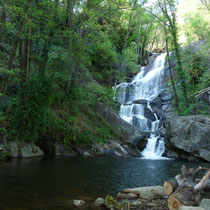

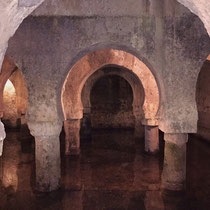

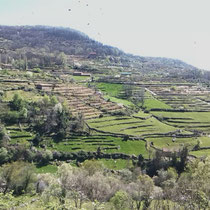

What is worth visiting in Extremadura
Extremadura: Die Provinzen sind Cáceres & Badajoz, the capital is Cáceres
- Badajoz: Mérida, they also call it "the little Rom", its arquaelogical Ensemble is declared UNESCO World Heritage thanks to the roman theatre, the Amphitheatre, you can visit the National Museum of Roman Art, El Museo de Arte Romano, with an incalculable value due to its exhibits: roman sculptures, coins, ceramics and mosaics of extraordinary beauty among others
- Cáceres: Here you can find beautiful cities such as the town Cáceres, its downtown is declared World Heritage by the UNESCO. Also the town Trujillo with its medieval fortress, Trujillo is the birthplace of the ancient conquerer of the Inca Empire, Francisco Pizarro. In the province Cáceres you also have the precious zone La Vera and the cherry tree valley El Valle del Jerte
In the Interior: Castile-León


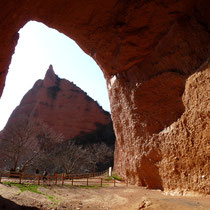

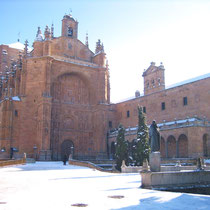
Castile and León in a few words: They have more than 500 castles in this region of Spain
Provinzen Salamanca, Ávila, Burgos, León, Zamora, Valladolid, Segovia, Palencia, Soria, the capital is Valladolid
- Valladolid: the central Place La Plaza Mayor de Valladolid and its City Hall, Colon died in this town, the museum of Cervantes
- Segovia: The historical downtown of Segovia and its roman aqueduct, el Acueducto de Segovia, UNESCO Wolrd Heritage. Gastronomically Segovia is known for its pigling, the so-called Cochinillo de Segovia. Natural Park the Sickels of the river Duratón, Las Hoces del Duratón & its convent El Convento de Nuestra Señora de los Ángeles de la Hoz del Duratón, The Palace of La Granja de San Ildefonso, the castles El Castillo de Coca and the castle El Castillo de Castilnova
- Salamanca: Salamanca has Europe's oldest university, the historical downtown is declared UNESCO World Heritage, the Cathedral of river Tormes, the shellhouse, La Casa de las Conchas, the central place, La Plaza Mayor de Salamanca, der Anaya-Platz, la Plaza de Anaya, Art-Nouveau&Art Decó Museum, La Casa de Lis, the roman bridge, el puente romano, etc.
- Ávila: the historical downtown, the impressive protective city-walls, La muralla de Ávila
- Burgos: the gothic Cathedral, La Catedral de Santa María de Burgos, and the town's arch, el arco de Santa María, the statue of the Cid, the reconquerer of the Christians of the Iberian Península
- León: here stands the Gaudi-Palast in a small town called Astorga, here you can also find the ancient goldmines of the roman, Las Médulas
- Zamora:
- Soria: die Hermitage, La Ermita de Nuestra Señora del Mirón
- Palencia: The Cathedral of Palencia and its Plaza Mayor, La Plaza de la lnmaculada, the 20 m tall statue, El Cristo del Otero
La Rioja, Aragón, Navarra

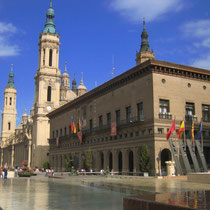
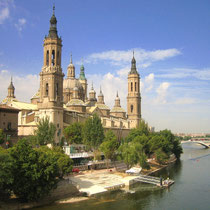

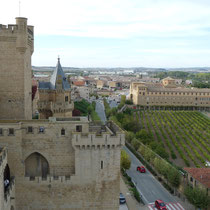


The Northeast: Navarra, La Rioja, Aragón
- La Rioja: the capital is Logroño, the city centre, El Monasterio de Yuso, the Tapas-street, La Calle del Laurel, the wine museum Vivanco, the village Elciego
- Aragonien: Aragón is Comunidad Autónoma, die Provinzen sind Zaragoza, Teruel und Huesca, the capital is Zaragoza:
Zaragoza: here stands a beautiful palace, el Palacio Aljafería, the cathedral La Basilica Nuestra Señora del Pilar, a natural parque El Monasterio de Piedra, with stunning lakes, grots and cascades
- Navarra: the capital is Pamplona (known for the Fiesta de San Fermines), the cathedral, La Catedral de Santa María la Real of Pamplona, the church, La Iglesia de Santa María de Eunate; In Navarra their is a half desert, called, the Bardenas Reales, offering a bizare landscape to the spectator with a surface of more than 415km2, the wood , la selva de Irati, er ist der zweitgrösste Buchen- und Fichtenwald Europas
Madrid Capital
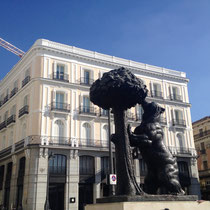


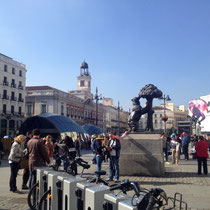
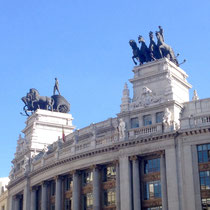
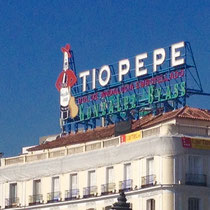
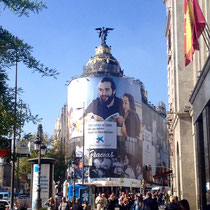


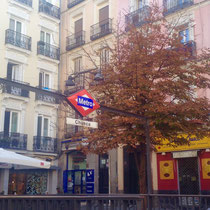
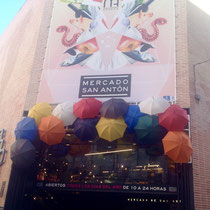
Spains Capital Madrid: "De Madrid al Cielo"
- Monuments, Places und principal streets: Madrid's architecture mixes late renaissance up to early Barock & Modern buildings:
The royal palace, El Palacio Real, the royal theater, El Teatro Real, La Puerta de Alcalá, the City Hall of Madrid, El Palacio de Comunicaciones, in front of the La Plaza de Cibeles, Madrid's La Puerta del Sol, the central place, La Plaza Mayor, the Templ of Debod, a real Egyptian temple aging more than 2000 years, the fashionable and popular districts Chueca, La Latina and Lavapies, Madrid's biggest flee market El Rastro (open every Sunday), the Santiago de Bernabeu football stadion. Madrid's main streets: El Paseo de La Castellana, El Paseo de Recoletos, La Calle Serrano, die Gran Vía,
- Parques:
the Retiro-park, El Parque del Buen Retiro, ein riesiger Park im Zentrum Madrid's the glas palace, El Palacio de Cristal, a rose garden, artificial ponds and a lake with boat hire, the recreation parque La Casa del Campo with a lake with coffee bars, a zoo, an amusement parque, a cable railway, el Teleférico, and wide green surfaces. Madrid Río: a modern instalation in the centre of Madrid, dedicated to spare-time and cultural events
- Museums:
Museo del Prado, Museo Nacional Centro de Arte Reina Sofia, el Thyssen-Bornemisza, Museo Arqueológico Nacional, u.a.
- In the suroundings of the capital Madrid-La Comunidad Autónoma de Madrid:
San Lorenzo El Escorial, Chinchón, Patónes de Arriba, Manzanares El Real, Lozoya de Buitrago, Alcalá de Henares, Aranjuez, etc.
In the Interior: Castile-La Mancha


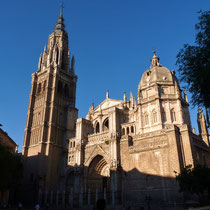


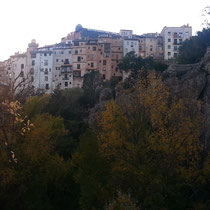
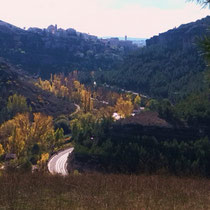
The provinces of Castile-La Mancha are: Toledo, Cuenca, Ciudad Real, Albacete, Guadalajara, the capital is Toledo
- Toledo: the entire old downtown is declared World Heritage by the UNESCO, the gothic cathedral Primada de Toledo dating from the XIII century, the monastry el Monasterio de San Juan de los Reyes, etc., the castle El Castillo de Consuegra with the view on the characteristic white wind mills of the Mancha (Don Quixote by Miguel de Cervantes), Toledo is famous for its ancient fabric of swords and also for its mazapan
- Cuenca: the hanging houses, las Casas Colgadas, the cathedral Santa María la Mayor, the castle El Castillo del Belmonte
- Albaceta: castles and prehistoric art
- Guadalajara: here you can find Europe's most sothern oak forest, el Hayedo de Tejera Negra, a reservation is necessary before visiting this area
- Ciudad Real: castle and prehistoric art
Special routes: the route of the Don Quixote (La Mancha and its white wind mills), the route of the saffron fields (Spains "soft gold"), the route of the castle of La Mancha
The East of Spain: Catalonia, Valencia, Murcia


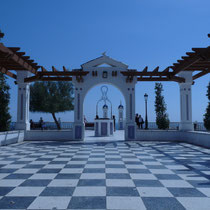

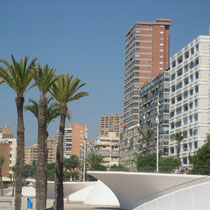
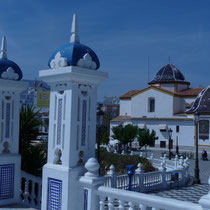
Catalonia in a few words:
The provinces are Barcelona, Taragona, Lerida and Girona, the capital is Barcelona
- Catalonia: the town of Barcelona and its surroundings:
Monuments and important streets: Gaudí's Sagrada Familia, the street La Rambla, it is Barcelona's most famous street in the centre of the city, the market hall, El Mercado de la Boquería. The gothic quater, el Barrio Gótico, the cathedral Santa Maria del Mar and the more than 700 years old real monastery, El Monasterio de Pedralbes, declared historical and artistic monument. In the avenue María Cristina lies the royale palace, El Palacio Montjuic with its unique musical fountain, la fuente de Montjuic. Gastronomically the people of Catalonia consume cooked snails, los caracoles, the sausage speciality la botifarra and in the winter time los Calçots, a bulbous plant.
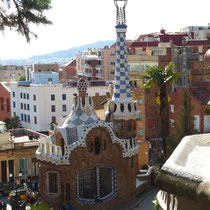
Antonio Gaudí's urban parque El Parque Güell, reflecting Gaudí's dream of urban arquitecture as well as the buildings La Casa Milá and La Casa Batlló, the palace El Palacio Güell, the tower La Torre Bellesguard.
- Tarragona: La Plaza de la Font, with its City Hall, the rests of an ancient roman circus, el Circo romano, the up to 8 plants erected human towers, Los Castells, orinating from the XVIIIth century in the town Valls inTarragona
- Girona: The beautiful natural volcanic parque La Garrotxa
Valencia: Valencia, Castellón, Alicante
Murcia: spring festival El Bando de la Huerta in Murcia (tipical food el paparajote)
The South of Spain: Andalusia


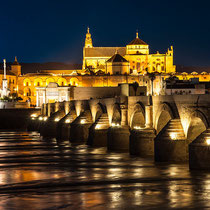

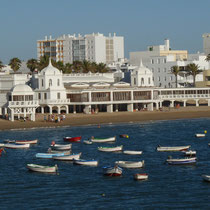

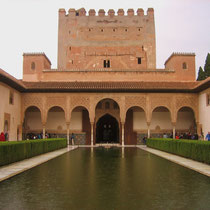

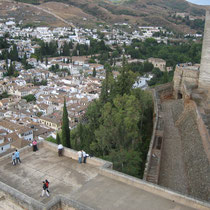

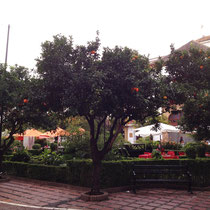
The provinces of Andalusia are Seville, Granada, Córdoba, Málaga, Cádiz, Jaen, Huelva, Almería, the capital is Seville
- Sevilla: the Alcázar of Seville, El Real Alcázar de Sevilla is an outstanding example of mudéjar arquitecture (iberian arquitecture strongly influenced by moorish taste and workmenship), the cathedral Santa Maria de la Sede of Sevilla with the bell tower, la Giralda, an ancient minaret and the town's landmark
- Granada: The Alhambra of Granada, La Alhambra, it is an outstanding fortress and palace at the same time and has been described as "the pearl set in emeralds", the gipsy caves of Sacramonte, las Cuevas de Sacramonte, charming places in the province of Granada: Almuñecar
- Córdoba: the Roman Bridge of Córdoba, el puente romano de Córdoba, the Mosque of Córdoba, la Mezquita de Córdoba
- Málaga: the town Marbella and its promenade, El Paseo Marítimo, the City Hall at the La Plaza de los Naranjos
- Cádiz: La Catedral de la Santa Cruz de Cádiz, the roman theatre, el teatro romano de Cádiz, the theatre, el Gran Teatro Falla, the place la Plaza de Topete, also called La Plaza de las flores, the beach La Playa de la Caleta, La Plaza de España, the white villages
- Huelva: the Natural Parque El Parque Natural de Doñana, beautiful beaches such as la playa de El Portil, Matalascañas, etc..
- Jaen: The Cathedral of Jaen, the white villages such as Baños de la Encina or Alcalá la Real, the vast olive-tree fields of Jaén
- Almería: the complex of Alcazaba-Gibralfaro
The Balaric and Canarian Islands